OSHA's sanitation standard (29 CFR 1926.51) requires one toilet on a construction site for up to 20 workers, with a second unit added past 20 and a ratio of one per 40 workers beyond that. A three-carpenter framing job…
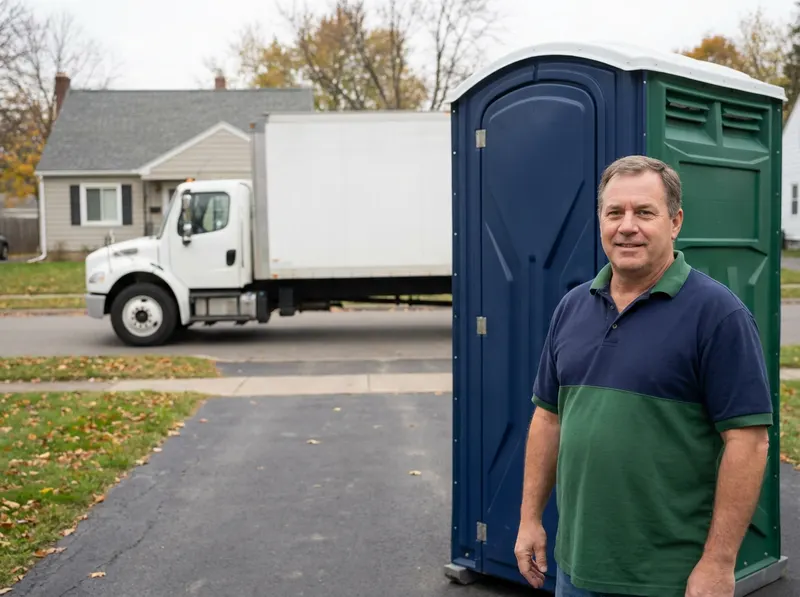
OSHA's sanitation standard (29 CFR 1926.51) requires one toilet on a construction site for up to 20 workers, with a second unit added past 20 and a ratio of one per 40 workers beyond that. A three-carpenter framing job in Riverside needs a single standard unit; a 30-worker concrete pour in Black Rock needs two, and adding a hand-wash station keeps a large crew compliant without a trip to the nearest gas station. Confirming crew count and shift length at booking sets the right number of units the first time.
Three unit types cover most Buffalo job sites. The standard construction unit is a non-flush hold-tank toilet built for daily heavy use, the most common choice for framing, roofing, and excavation crews. The flushable unit adds a foot-pump flush and an internal fresh-water tank, which suits longer builds and office-trailer areas where cleaner conditions matter. The ADA-compliant unit is a wider, ground-level model with grab bars and a 60-inch turning space, required on public-works and municipal projects. General contractors running mixed trades on tight lots in Allentown or Elmwood Village often pair one standard unit near the work face with an ADA unit closer to the site entrance.
Weekly service is what separates a job-site rental from a one-off event drop. On a standard monthly contract the truck returns once a week to pump the tank, refill toilet paper and hand sanitizer, and hose down the interior. Multi-week projects in Kaisertown, Lovejoy, and Broadway-Fillmore stay on that weekly cycle for the life of the build; twice-weekly service is available for large crews or summer heat, when a hard-working 60-gallon tank fills faster. If a site is a single-room renovation with two workers for one week, a short-term standard unit at the $250 minimum is the fit; if it is a six-month commercial build near the University Heights corridor, a monthly service contract is the lower per-month rate.
Placement matters on Buffalo lots. Units need firm, level ground and clearance for a service truck to pull within about 25 feet. On narrow city parcels around Delaware Park and the Elmwood strip, the drop spot is often the driveway apron or a graded gravel pad rather than soft soil that a truck sinks into after rain. A right-of-way permit may be required if the unit sits on a city sidewalk or street rather than private property, the crew confirms the drop location at delivery and flags any street-placement issue before setting the unit.
Every job gets a firm, written price after a free on-site visit.
Tell us about your construction site toilet rental job in Buffalo and we'll send a clear, written quote, usually the same day.
 Nickel City Portable Toilet Rental